Free Support


Recognition is one of those things people don’t really talk about properly. It’s there. Everyone knows it matters. But it’s rarely treated like something important on its own. It’s almost seen as an add-on. Something you do after everything else is done. Because of that, most people don’t notice it until it’s missing.
Nothing breaks immediately. Work still happens. Classes still run. Teams still function. But something feels slightly off. People stop putting in that extra bit of effort. Not in an obvious way. Just small things. Less initiative, less energy, less interest in going beyond what’s required. No one really says anything about it. But it shows. Usually, it’s because effort isn’t being acknowledged anywhere.
This is the tricky part. Most people won’t openly say they want to be recognized. It feels uncomfortable to ask for that. But that doesn’t mean it doesn’t matter. When someone puts in effort and it goes unnoticed again and again, it creates a kind of disconnect. Not dramatic, just quiet. They start thinking, what’s the point of doing more if it doesn’t change anything? So they stop. Not completely. Just enough that the difference is there.
There’s a difference between telling someone to do better and showing them that what they did mattered. One feels like pressure. The other feels like motivation. When someone is recognised, it doesn’t force them to perform. It reminds them that what they’re doing is being seen. That’s why it works differently. In workplaces, it shows up as consistency. In schools, it shows up as confidence. In teams, it shows up as trust. Not instantly. But over time, it builds.
Big achievements are obvious. Top scores, big wins, major milestones. They get attention anyway. But smaller efforts don’t. Improving slowly. Handling something difficult without making it visible. When those things get recognized, it hits differently. Because it wasn’t expected. That’s usually what makes it stay.
This part isn’t always obvious at first. Recognition doesn’t just say “you did well.” It starts shaping how people think about themselves. Someone recognized for being reliable starts seeing themselves that way. Someone appreciated for creativity leans into it more. A student acknowledged for improvement starts believing they can do better. It builds identity slowly. Not through instructions. Just through repeated signals.
When recognition is missing for too long, work starts feeling mechanical. Do the task. No connection to it. No sense of it meaning anything beyond completion. That’s when environments start feeling flat. Not because people don’t care. But because nothing is reflecting their effort back to them.
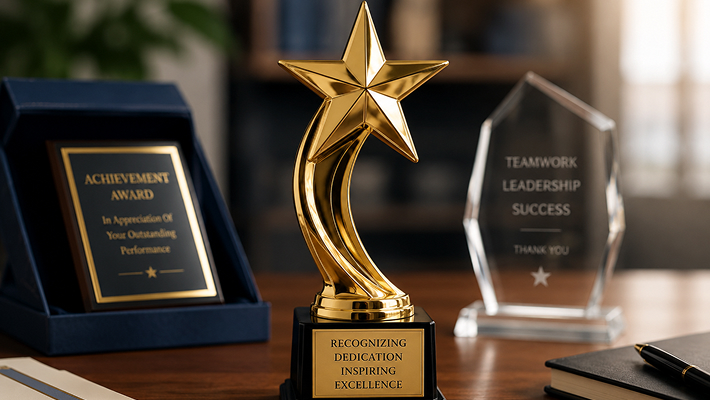
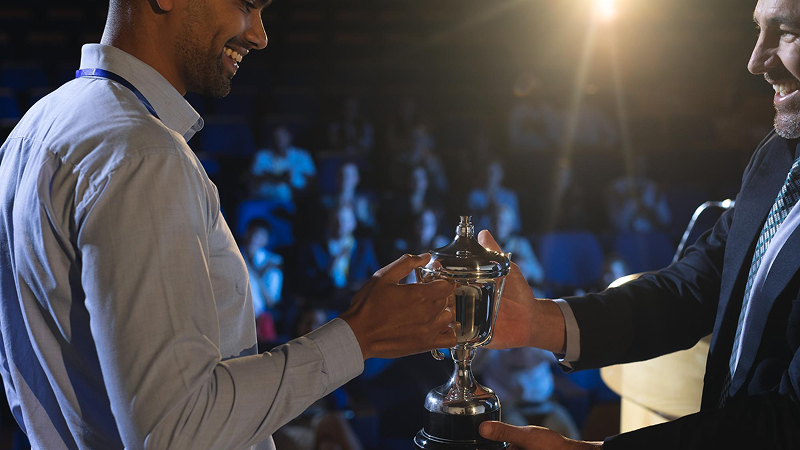
Not all recognition works the same way. Sometimes a simple acknowledgment is enough. Other times, something more tangible makes a difference. That’s where awards come in. A physical award does something different. It gives the moment a place. Something you can go back to later. At All Star Awards, this is usually the role. Not just creating awards, but supporting that moment so it doesn’t disappear as quickly. Because without something to hold onto, even meaningful moments can fade. Contact Us.