Free Support


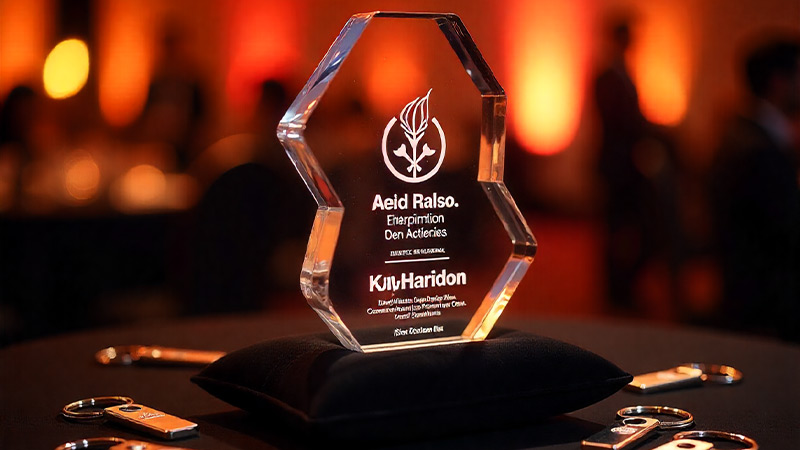
Most awards don’t fail in an obvious way. They look fine. Good material, clean finish, everything printed correctly. If you line them up on a table, there’s nothing technically wrong with them. You take them, you keep them somewhere, and after a while they just become another object. That’s usually what people mean when they say something feels generic.
A generic award has a certain feeling to it. Like it could be given to anyone. Same design, same wording, same everything. The only thing that changes is the name. And even that sometimes feels like it was just filled in. It doesn’t feel specific. So it doesn’t feel personal. When something feels replaceable, people don’t attach much to it. They accept it, maybe appreciate it in the moment, but it doesn’t stay with them. Not in the way it could.
A lot of the time, generic awards aren’t low quality. They’re made well. But they don’t connect to anything. They don’t reflect what actually happened. They don’t say anything about the effort, or the situation, or why this person got it instead of someone else. They just confirm that something happened. That’s the gap. Because recognition isn’t just about marking an outcome, it’s about reflecting what went into it. When that reflection is missing, the award feels distant.
You don’t need to explain it. People just know. When an award is part of a routine, same script, same process every time, it starts feeling like a checkbox. Name called, award given, move on. No pause. No sense that this moment is any different from the last one. That’s where it starts losing meaning. Because recognition needs a moment to land. Without that, it just passes through.
It doesn’t rush. Even if the difference is just a few seconds, it matters. A small pause before handing over the award. A sentence that actually reflects the person. Something that makes it feel like attention is being given, not just the award. That’s enough. It doesn’t need to be dramatic. It just needs to feel intentional. At All Star Awards, this is usually where things shift. The award isn’t treated as a final step, but as part of the moment itself.
This is one of the simplest fixes, but it’s also the one most often missed. When an award feels generic, it creates distance. When it feels personal, it closes that gap. Personal doesn’t mean complicated. It can be small. A message that isn’t copied. A name that feels like it belongs there. Even slight adjustments in design depending on what the award is for. These things don’t take much. But they change how it feels.
Consistency is useful. But too much of it creates sameness. When every award looks identical, regardless of what it’s for, it flattens everything. A major achievement looks the same as something much smaller. That’s where the meaning starts getting lost. Because visually, nothing stands apart. Meaningful recognition doesn’t remove consistency. It just breaks it slightly where needed. Enough to reflect what actually happened. Contact Us.